Showing posts with label waste recycling. Show all posts

Tuesday, April 19, 2022

7 ways to reduce and control e-waste management


Only 30% of the 75% recyclable rubbish in India is now recycled, so waste management in India has a lot of room for growth. A loss of powerful guidelines for the collection, storage, and recycling, in addition to inefficient infrastructure, are just a few of the various elements contributing to the country’s inefficiency in waste management.

Recent trends in e-waste management

The Environmental Protection Agency’s National Strategy for Electronics Stewardship serves as the muse for brand spanking new guidelines and plans for digital tool manufacturing and recycling. A cognizance of a zero-waste, linear economy, cantered susceptibility to cyber protection to enhance device destabilization methodologies, and a usual cognizance of right e-waste recycling accreditations, employees’ rights, and ecologic oversight for hooked-up carrier agencies are many of the proposed or implemented.

Startups have commenced having interaction in lots of activities, together with e-waste disposal, credit score monitoring, logistics, and distribution, records safety and disposal, and CSR initiatives. They start via way of means of sorting the particles into glassware, plastics, and metallic. Following this, the method all the dangerous compounds and ship the leftovers to be extracted. The rest of the plastic and metallic is handed by recyclers.

Public health, Environment, and E-Waste

E-waste disposal is becoming an international public fitness and environmental concern, as digital waste has become the world’s fastest-developing part of the traditional municipal strong waste stream. E-waste is any digital or electric tool that has been thrown, surpluses, obsolete, or broken. The majority of discarded digital devices are stored in families due to the fact humans do now no longer apprehend the way to cast off them properly. This ever-growing trash is extremely complex in nature, and it’s additionally a wealthy supply of commodities consisting of gold, silver, and copper that may be recovered and reintroduced into the manufacturing process.

Disposal and Management of E-Waste

It isn’t just about reducing environmental risks in relation to e-waste reduction. Minimizing e-waste conserves assets and minimizes the quantity of power required to fabricate those products; recycling portions of interior e-waste consumes a long way much less power than the production of new ones. Listed under are more ways, in which e-waste can be reduced and managed.

Purchase fewer items

The maximum common supply of e-waste is the acquisition of gadgets we do not require. Avoid shopping for new digital gadgets that the maker can’t reuse or discard. Opting for recyclable or long-lasting digital merchandise is a sustainable step toward waste management.

Donate or give away your e-waste

If you don’t need something, donate it so that it can be appreciated by someone else. Donations are excellent tax deductions since the amount is generally close to the worth of the asset sold.

Find more about the recycling possibilities in your region

Check out your local recycling choices, no matter where you live, and share them with your family and neighborhood. For example, if you live in the United States, the Environmental Protection Agency’s website contains information on local electronics recycling opportunities.

Teach your children about e-waste

Youngsters are our legacy, and it benefits if we can teach a commitment to e-waste recycling from an early age. Because we know that consumers will continue to acquire new devices, it’s critical to constantly repeat the idea that older models should be recycled rather than discarded. If we dump our devices into a landfill, we are endangering the environment. Recycling, on either hand, has a lot of advantages for the environment.

Waste Management Technology provides better ways to gather, sort, and use waste, and new tools and methods are always emerging. As these advancements become more common, waste management will continue to become more sustainable.

Blog Source Content: https://zerowasterecycler.wordpress.com/2022/04/19/7-ways-to-reduce-and-control-e-waste-management/

Monday, March 21, 2022

Waste is only waste if we waste it! 🚯

 Waste is only waste if we waste it! 🚯🗑️ 

Take a pledge with DCC to reduce the generation of waste and take a step towards waste management by segregating and recycling plastic and other solid waste from landfills.
we take govt. and private contracts.
for more information on solid waste processing and waste segregation services, visit www.zerowasterecycler.com
📞 Call/DM us for enquiries!! +91-7290049003
Email: info@zerowasterecycler.com

Wednesday, June 9, 2021

Why Guwahati is a Good bet for a Zero-Waste Challenge


Only a fraction of waste generated in Guwahati is recycled; the remaining end up at dumpsite or is littered around.

Guwahati is most of the 3 towns selected with the aid of using Waste Aid, a United Kingdom-primarily based totally non-profit, with a purpose to quickly release a Zero Waste Cities Challenge. The goal is to discover marketers with revolutionary commercial enterprise thoughts which could assist lessen or recycle waste and create inexperienced employment opportunities.

Two winners in each city will be awarded €10,000 (Rs 892,146) and business mentoring support to help make their idea a reality. Waste control is the number one obligation of Guwahati Municipal Corporation (GMC), which overlooks the everyday operations and affairs together with number one series, secondary series, domestic composting, processing, and disposal of strong waste. The city, with a populace of over a million, is split into 31 wards — every of that is assigned to a non-income chargeable for doorstep series, road sweeping, and series of person charges.

The city generates approximately 550 tonnes per day (TPD) of solid waste — more than 85 per cent of which finds its way to the dumpsite located at Boragaon, apart from the numerous other small garbage vulnerable points which can be seen in the city. Guwahati has a windrow technology compost plant of 50 TPD in Boragaon. It has been functional since 2010, and a proposal for augmenting its capacity to 200 TPD has been proposed.

GMC initiated a project for purchasing dry waste from its citizens to promote the segregation of municipal solid waste (MSW). Awareness and home composting are being promoted through pilot projects. Indian Institute of Technology-Kharagpur has been engaged by GMC as a consultant to help improve the municipal waste management system in Guwahati.

Despite all these steps, Guwahati ranked 356 in the Swacch Survekshan 2020 survey, an annual survey of cleanliness, hygiene, and sanitation in villages, cities, and towns across India.

This shows that efforts positioned on my own through government won’t be sufficient and we want a much in depth engagement which takes its power from the individuals who need to make a distinction to their cities. Young marketers with novel ideas, and residents who care and need to make a distinction through replicating present fashions of pleasant waste control practices have an extremely good opportunity.

Only a fragment of waste generated in Guwahati is recycled; the final finally ends up at dumpsites or is littered around. Waste Aid believes that locality improvements preserve the important thing to a inexperienced financial system and may make the surroundings cleanser and more healthy for the city’s population.

Michelle Wilson, Waste Aid Circular Economy Network Director said:

“We are really excited to launch this competition in Guwahati today. There are already some fantastic examples of the circular economy in the city. We hope that through the Circular Economy Network activities, and in particular the Zero Waste Cities Challenge, we can help entrepreneurs turn their ideas into reality.”

The Zero Waste Cities Challenge will run over six months. The utility procedure is open till June 19, 2021. In July, 12 semi-finalists could be decided on and could obtain in depth commercial enterprise aid to hone their concept and create a pitch. The very last spherical will contain pitching at a Shark Tank occasion in the front of a panel of enterprise experts.

Source About: https://www.downtoearth.org.in/blog/waste/why-guwahati-is-a-good-bet-for-a-zero-waste-challenge-76973

Tuesday, September 15, 2020

Waste Segregation and Management

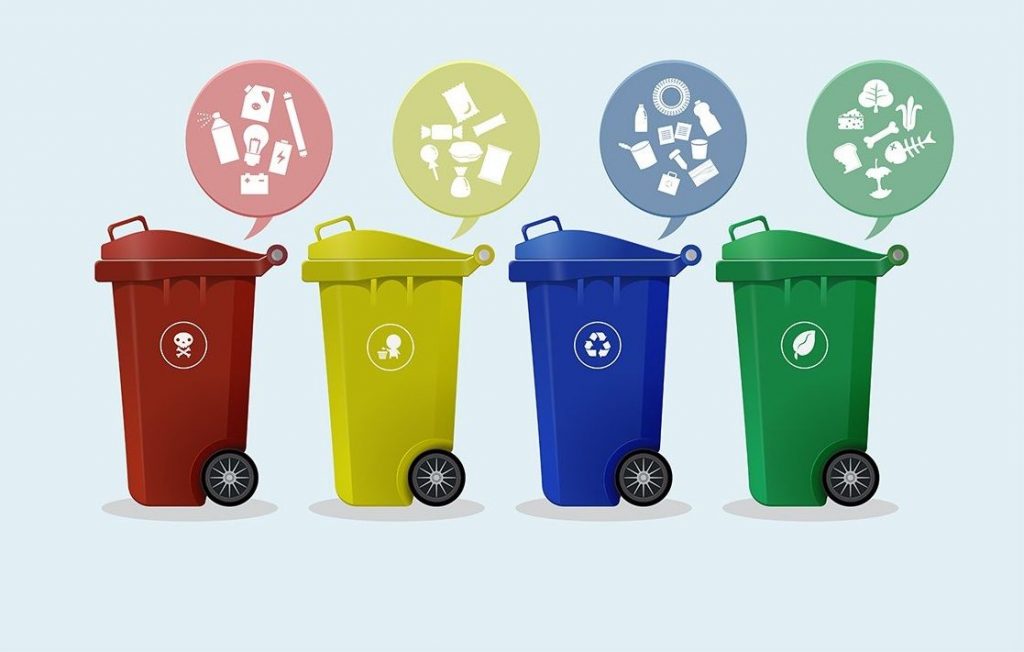
Waste segregation is the easy technique of finding out your dry and moist waste and storing them separately. The dry waste is then despatched for recycling, whilst the moist rely is composted properly.

Waste segregation wishes to be executed in each family in order that the quantity of waste dumped in landfills is extensively reduced. This in turn reduces land, water, and air pollution. Segregating waste additionally makes it easier to recycle, compost, or incinerate it, relying on whichever approach is applicable.

Zero Waste is a philosophy of doing away with the technology of substances that haven’t any possible or monetary choice for end-of-use management. Zero Waste is a fixed of standards targeted on waste prevention that encourages the remodel of aid lifestyle cycles so that each one merchandise is reused. Its end purpose is to lessen waste from landfills and eventually, save you land, water, and air pollution.

Most of the workplaces observe a two-bin system—one for recyclable waste and one for moist garbage. But much like your home, the greater you segregate, the higher the waste management.

“Before an organization for waste segregation, a conduct alternate is crucial for its powerful operation. It’s the duty of the authorities and those who are privy to segregation to teach others.

Benefits of Zero Waste management:

Zero waste reduces our weather impact.
Zero waste conserves useful resources and minimizes pollution.
Zero waste promotes social fairness and builds community.
Zero waste helps a neighborhood around the financial system and creates jobs.
Zero waste desires groups to play a key role.
Zero Waste is a fixed of ideas cantered on waste prevention that encourages the remodel of useful resource lifestyles cycles so that each one merchandise is reused.


DCC – Manufacturing Waste Segregation Machine, MSW Plant, Bio-mining Project in India.  I have taken the initiative to help household recycle their waste and take ‘Swachh Bharat Abhiyan’ to next level.


Blog Source: https://zerowasterecycler.wordpress.com/2020/09/15/waste-segregation-and-management/

Tuesday, August 18, 2020

What is EPR (Extended Producers Responsibility), its Needs, and Guidelines?


Extended Producer Responsibility (EPR) is a legislative strategy under which producers are given significant responsibility for the fair treatment or disposal of post-consumer products.

DCC is here to provide plastic waste management services to all the brand owners. We are waste segregators. We recover plastic dumped at waste site/landfills.

For more info, Call: +91-7290049003 or Email: info@zerowasterecycler.com

read more - https://www.zerowasterecycler.com/what-is-epr-services/


Friday, June 12, 2020

Some of the best organization that is making recycling easy in India

waste recycling

The quantity of solid waste produced in city depends on the type of the city, its population, living standards of the residents and degree of commercialization and various activities prevailing in the city. The generation of waste mainly depends on the increase in population and the type of activity.

A variety of NGO have been launched in India itself, to help you reuse, reduce and recycle the products you use on an everyday basis. Ahead, we list down some of such startups and services that are trying to take you one step closer to a sustainable future.
  • NSWAI
  • CWE
  • DCC (Daya Charan & Company)
  • Chintan
  • Wastewarriors
  • E-Waste Recyclers
  • Saahas Zero Waste
  • Paperman Foundation
  • Gem Enviro Management
Daya Charan & Company (DCC) is the only leading professional non-profit organization in the field of Solid Waste Management in India.

DCC comprises of a strong 100+ member team of experts working on waste management which includes all kinds of waste such as:
  • Municipal solid waste
  • Bio – medical waste,
  • Hazardous waste
  • E-waste and
  • Construction & demolition waste
  • C&D Waste Recycling
  • Legacy Waste Bio-mining
  • Fresh Waste Segregation
  • Complete O&M of Landfill
Blog Source: https://www.zerowasterecycler.com/some-of-the-best-organization-that-is-making-recycling-easy-in-india/