Extended
Producer Responsibility (EPR) is a legislative strategy under which producers
are given significant responsibility for the fair treatment or disposal of
post-consumer products.
DCC
is here to provide plastic waste management services to all the brand owners.
We are waste segregators. We recover plastic dumped at waste site/landfills.
The quantity of solid waste produced in city depends on the type of
the city, its population, living standards of the residents and degree
of commercialization and various activities prevailing in the city. The
generation of waste mainly depends on the increase in population and the
type of activity.
A variety of NGO have been launched in India
itself, to help you reuse, reduce and recycle the products you use on an
everyday basis. Ahead, we list down some of such startups and services
that are trying to take you one step closer to a sustainable future.
NSWAI
CWE
DCC (Daya Charan & Company)
Chintan
Wastewarriors
E-Waste Recyclers
Saahas Zero Waste
Paperman Foundation
Gem Enviro Management
Daya Charan & Company (DCC) is the only leading professional non-profit organization in the field of Solid Waste Management in India.
DCC comprises of a strong 100+ member team of experts working on waste management which includes all kinds of waste such as:
The ultimate aim of recycling plastic is to reduce high rates of
plastic pollution. This can be done by encouraging people in-home or
office to recycle or reuse the plastic. It will help keep these harmful
materials out of landfills. Below are the different methods to recycle plastic:
Dispose of Plastics Properly
Disposing plastic waste can be done in an efficient manner. One of
the safest methods of disposing plastic is recycling. We need to look
into smart sorting to enable effective recycling.
Sort out your plastics accordingly
In industrial plastic recycling, there are seven widely acknowledged
material qualities of plastic. each type of plastic has a distinct mix
of dyes and additives that further affects its color, shape, toughness,
adaptability, and melting point. Using automated bins will help in waste
collection and sorting.
Contact recycling facility
The best you can do is contact the nearby recycling facility. The
collection center will do all the sorting as well as cleaning for you.
You can effortlessly dump all the dump cans, plastics, and papers
together.
Categories of Plastic
As mentioned above, there are mainly seven types of plastics exist in our current modern days:
Zero Waste is a whole machine technique to useful resource management
targeted on reducing, reusing, and recycling. To make recycling
paintings for everyone, we want to buy products made from the materials
we recycle. This reduces the need to make use of non-renewable sources
through reusing substances that have already been consumed.
Zero waste
is a whole system technique that targets to take away as a substitute
than ‘manage’ waste. As nicely as encouraging waste diversion from
landfill and incineration, it is a guiding layout philosophy for casting
off waste at supply and at all factors down the deliver chain. It
shifts from the present day one-manner linear useful resource use and
disposal subculture to a ‘closed-loop’ circular system modelled on
Nature’s successful strategies.
In contrast, a 0 waste technique conserves natural assets and reduces
pollutants from extraction, manufacturing and disposal. Reducing and
reusing approach fewer products are made, as people buy less and as
merchandise are made to last. Recycling continues waste out of landfills
and incinerators and provides producers with recycled as opposed to raw
materials to make new goods. Recycling or restoration of resources is
the procedure of taking useful however discarded items for next use.
Traditionally, these items are processed and cleaned before they’re
recycled. The technique goals at reducing strength loss, consumption of
new fabric and reduction of landfills. We lessen what we need, reuse as a
great deal as we can, send little to be recycled, and compost what we
cannot.
An environmental expert in a brief interview stated that “India’s
waste problem can only be resolved if it revolutionizes the way waste is
treated and adopts a smarter waste management system; instead of
dumping all the waste in landfills, recycling is the way to go.
Since every change starts at the individual level we must start
recycling at the household level. True that recycling companies can sort
recyclables through landfills but that requires a huge amount of
capital and time.
DCC has taken the initiative to contribute to the Solid Waste Management
Industry by Segregating Waste at Landfills along with building
provisions to make safe disposal or recycling facilities for the
segregated Waste, thus taking ‘Swachh Bharat Abhiyan’
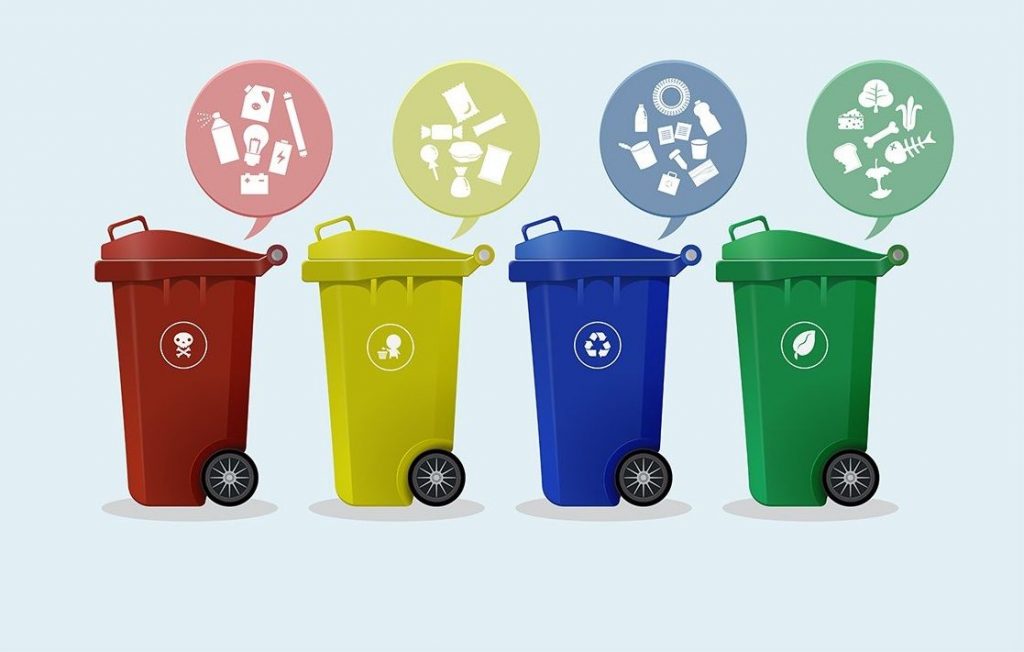
to the next level. The first step in waste recycling is to learn what
can and can’t be recycled. Next, you need to learn how to separate them
so they can be sent to the correct recycling facility.
Some of the most common products found in the home environment are listed below: Paper – Paper waste includes items such as school
papers, cardboard, magazines, newspapers, food wraps and anything else
that is considered a paper product. These should be bundled all together
and disposed of in the paper containers.
Plastics– Plastics are a very common household waste
that is one of the hardest to dispose of. It’s important to recycle
plastics because these products will stay in landfills for many years
making them very damaging to the environment.
Glass – Recycling glass has to be done according to
the laws governing the region and state in which you live. Make sure you
find out what these are in advance. Before disposing of the glass
anywhere where it could hurt a human or an animal.
Organic Waste – Organic waste includes tree
clippings and leaves along with the food waste that needs to be disposed
of. These can be recycled and used as compost for growing gardens and
lawns.
Metal – Most homes won’t have metal waste on a
regular basis but occasionally you may have items that need to be
recycled. Some areas have programs designed especially for metals.
It is extremely important to understand the need for recycling of
waste so there is a significant decrease in the piling up of dumps
causing high levels of pollution and disease breeding insects that harm
the environment as well as a human being.
It is not easy to bring about a change but only if you could support DCC in this cause, we assure a better tomorrow is not far.
Commercial and residential trash removal, bulk hauling construction services.
Clearing these mounds of years-old waste, called legacy waste, is the
easiest and fastest way to reduce our national emissions, and save
surrounding villages from polluted water sources, smoke, flies and
stench. Some years, generation of dry waste, especially plastic waste
and packaging, has increased at a tremendous rate.
Legacy wastes
– waste that has been collected and kept for years at some barren land
or a place dedicated for Landfill (an area already to dump the country
waste), this waste can be roughly grouped into four categories:
contained and/or stored waste, buried waste, contaminated soil and
groundwater, and contaminated building materials and structures.
Examples of contained or stored waste are wastes in tanks, canisters,
and stainless steel bins. For example, large quantities of high-level
radioactive wastes are stored at Department of Energy (legacy sites in
tanks. Buried wastes include radioactive and chemically contaminated
wastes disposed of in near-surface pits and trenches.
There needs to be an effective way to reduce the huge Landfill
Mountains that have been created over the years with continuous dumping
of waste such that most of them have no capacity to accumulate waste.
DCC
is manufacturing Solid Waste Segregation machines for Legacy Waste
Biomining to segregate the waste at Landfill such that the segregated
waste can then be recycled (eg. Plastic waste), while manure (soil) can
be used by Farmers, in parks etc.
The trommel is commonly use for the removal of fines from large waste materials. Trommel screens are widely used for wood chips, soil, compost, solid waste, domestic waste, ores, rock and aggregates accurate sizing and separation. it is suitable for both wet and dry applications.
A trommel is mining equipment comprising of a cylindrical drum that has many holes of a given size. The finer materials pass through the screen openings while the larger materials tumble towards their eventual exit at the rear of the drum.
large waste items are usually separated by passing them through a big inclined washing-machine-like (slowly rotating) drum. It's called a trommel screen. Trommel screen is mainly composed of motor, reducer, roller device, frame, sealing cover, inlet and outlet.
DCC - manufacturers of Waste Segregation Machine, Trommel and Ballistic separator. We are sourcing the robust grade materials from recognized entities and fabricating the heavy duty trommel under deep scrutiny of our quality experts. Further, the offered trommel screen is fitted on a long horizontal lathe and it is accessible from us at a nominal price.
Advantage.
Simple to operate and handle
Easy to maintain
Can handle waste with excess moisture also
A device that segregates material like stones, glass, metal, and rubber, from solid waste by passing the waste over a rotor.
Alternating sets of paddles are 60 to 120 degrees out of phase from
the adjacent paddle to provide agitation of the material stream on top
of the deck. The ballistic separator’s paddles are
fitted with replaceable screening plates that are used to screen out
material of a certain size as determined by the application.
Ballistic separation is used to do three distinct separations:
flexible materials, rigid materials, paper and plastic and to screen out
a certain size fraction of material etc.
We offer different techniques and screening systems to separate
material. Thanks to our innovative technology we can also effect the
removal of coarse parts. The screening devices are integrated in the
transport path to have a filtering on the actual shortest path.
DCC is manufacturing Waste Segregation Plants using
Ballistic separators and trommels to reduce the size of huge landfill
legacy wastes providing waste management solution in India. We
strategize to bring in environmental solutions that can help the
communities and organizations to become sustainable.
Source – http://www.zerowasterecycler.com/how-do-work-ballistic-separator/
Contact: DCC
info@zerowasterecycler.com
Mob No, +917290049003
Zero Waste is a set of
principles focused on waste prevention that encourages the redesign of resource
life cycles so that all products are reused. To make recycling work for
everyone, we need to buy products made from the recyclables.
The goal of zero waste is to
move to a circular economy where the waste so generated can be treated and
managed in a way that the overall outcome stays zero. Instead of discarding resources, we create a
system where all resources can be resumed fully back into the system.
The generation of waste can be
lowered through a variety of options, including reducing, reusing, recycling,
or taking appropriate action to prevent waste through design and engineering
solutions or segregating the waste from the initial level while segregation
process for the old piled up waste at landfills can be segregated through Waste
Segregation Plants. Many individuals, companies and municipalities continue to
strive to achieve zero waste goals, DCC
is manufacturing waste Segregation Plants to reduce the size of huge landfill
legacy wastes for waste management solution in India. We strategize to bring in
environmental solutions that can help the communities and organizations to
become sustainable.
Zero waste management
aims to send nothing to a landfill. We reduce what we need, reuse as
much as we can, send little to be recycled, and compost what we cannot. Zero waste programs include all of the following
strategies:
Reducing cons introduction-to-zero-waste emption
and discards
Comprehensive composting or bio-digestion of
organic materials
A ban on waste incineration and illegal dumping
the systematic reduction of landfilling over time
Benefits of Zero Waste:
ZERO WASTE BENEFITS OUR ENVIRONMENT
Zero waste reduces our climate impact.
Zero waste conserves resources and minimizes pollution.
Zero waste promotes social equity and builds community.
Zero waste supports a local circular economy and creates jobs
Zero waste needs businesses to play a key role
Contact:
DCC India
info@zerowasterecycler.com
Mob No, +917290049003
Source - https://zerowasterecycler.wordpress.com/2019/10/10/zero-waste-management-recycling/
East Delhi Municipal Corporation (EDMC) started segregating and processing the waste at Ghazipur landfill.
A trommel-cum-ballistic machine, which was engaged by the civic agency some time ago, was made functional on Wednesday to segregate 640 metric tonnes of waste daily. The machine, which is divided in four parts, will help in the segregation of wastes including, construction and demolition, plastic, enrich soil and inert.
For its operation, the east corporation has engaged a company that would also help in biomining and bio remediation of the garbage, which would be segregated into different fractions, including organic fines, bricks, stones, plastics and metals.
While sharing the process, an EDMC official said, To begin with, the ballistic separators will divide the entire waste into three segments – refuse derived fuel (RDF), construction and demolition (C&D) waste above 40mm and material less than 40mm that will be fed into the trommel. The machine will further segregate the waste into less than 6mm soil and inert waste of over 6mm size.The official explained that RDF would be utilised for combustion at waste-to-energy plant and might be used in the cement industry. C&D waste will be processed at the plant in Shastri Park for creating tiles and other products, he added. In a month, the civic body hopes to segregate and process 15,000-20,000 metric tonnes of waste from the landfill, which currently has 14 million metric tonnes of garbage.
We have taken up this pilot project in compliance with the Supreme Court and National Green Tribunal orders. They have been raising objection over the capping of landfill without segregating the garbage. The apex court has been insisting on remediation of the material, therefore, we have installed the machine.
EDMC plans to install another trommel with a capacity to process 300 metric tonnes of waste daily from October 2. Besides, we will also engage more landfill-management companies that can simultaneously work on different parts of the garbage mountain for remediation.